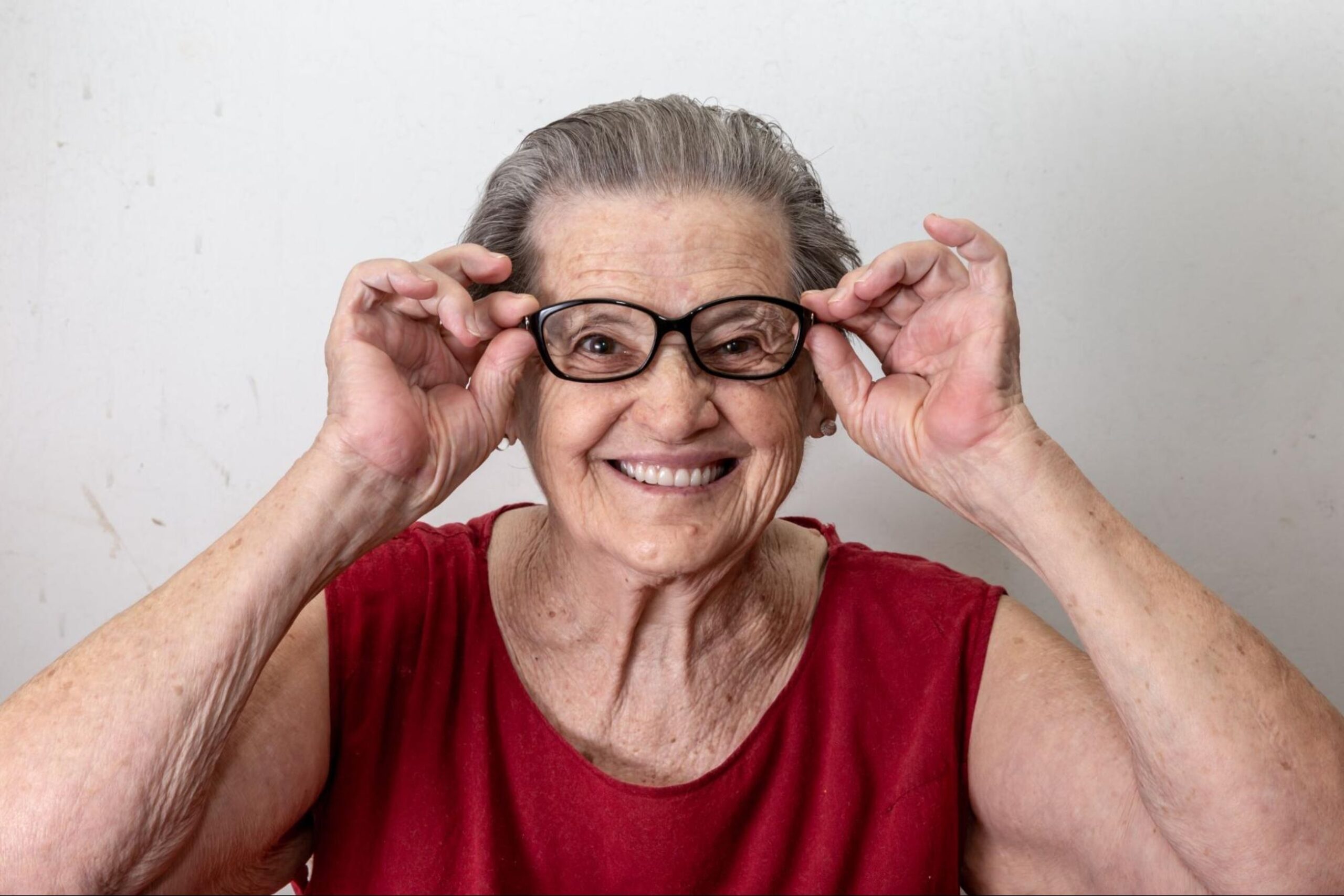
Low Vision Support & Rehabilitation
-
Eye Health
Discover how low vision affects sight and daily activities. Learn diagnosis, rehabilitation services, and tools that support independence.
February is Low Vision Awareness Month. This condition is a form of vision loss that cannot be fully corrected with standard glasses, contact lenses, or surgery. While it may limit certain visual abilities, it does not mean complete blindness. Many individuals with low vision retain usable sight and can continue to perform everyday activities with the right support and rehabilitation.
Care for those with low vision focuses on maximizing remaining vision, improving independence, and enhancing quality of life. With proper evaluation and individualized strategies, many can adapt successfully and maintain active, fulfilling lives.
What is low vision?
Low vision refers to significant visual impairment that persists even after medical treatment, surgery, or standard vision correction. Unlike normal vision, which allows clear and detailed sight, this condition reduces visual clarity, field of view, or contrast sensitivity in ways that interfere with daily tasks.
Low vision exists on a spectrum. Some individuals experience moderate visual impairment, while others have severe vision loss. Importantly, low vision differs from total blindness. Many patients still have remaining vision that can be enhanced through rehabilitation, adaptive tools, and specialized care.
What counts as low vision?
Low vision is defined not only by visual acuity measurements but also by how vision loss affects daily functioning. Reduced visual acuity, narrowed visual fields, or impaired contrast sensitivity may all qualify as low vision when they interfere with tasks such as reading, recognizing faces, or navigating environments.
Some individuals may have difficulty with central vision, making detailed tasks challenging. Others may lose peripheral vision, affecting mobility and spatial awareness. Even when vision remains measurable, its quality may be insufficient for independent daily activities without assistance.
Symptoms of low vision
Symptoms of low vision vary depending on the underlying cause and type of visual impairment. Common symptoms include:
Blurry or distorted vision
Difficulty reading, seeing fine details, and recognizing faces
Glare sensitivity
Difficulty seeing in low-light conditions
Reduced night vision
Blind spots
Narrowed peripheral vision
These changes can make everyday activities such as watching television, using a computer screen, or moving safely through unfamiliar spaces more difficult. Recognizing these symptoms early allows patients to seek appropriate evaluation and support.
Common causes of low vision
Low vision may result from a variety of eye diseases or systemic conditions. These conditions often damage critical parts of the visual system, limiting how clearly the eyes and brain can process visual information.
Age-related macular degeneration
Macular degeneration affects the central retina and is one of the leading causes of low vision, particularly in older adults. It primarily impacts central vision and reading ability. As the condition progresses, tasks such as recognizing faces or seeing fine details may become increasingly difficult.
Diabetic retinopathy
Damage to retinal blood vessels caused by diabetes can lead to vision loss over time. Vision may fluctuate or decline as abnormal blood vessels develop. Without proper management, ongoing retinal damage can significantly affect daily visual function.
Glaucoma and optic nerve damage
Glaucoma damages the optic nerve and often leads to progressive loss of peripheral vision. Because symptoms may develop slowly, vision loss can occur before detection. Regular eye exams are critical for early diagnosis and preserving remaining vision.
Retinitis pigmentosa
This inherited condition affects peripheral vision and night vision, gradually narrowing the visual field over time. As the disease advances, individuals may experience increasing difficulty navigating in low-light environments.
Neurological or vascular causes
Stroke, reduced blood flow, or neurological conditions can disrupt visual processing and contribute to visual impairment. These causes may affect how the brain interprets visual signals, even when the eyes themselves appear healthy.
Types of low vision
Low vision can be classified based on how visual function is affected:
Central vision loss: Makes reading and recognizing faces difficult
Peripheral vision loss: Affects mobility and awareness of surroundings
Night blindness: Limits vision in low-light environments
Reduced contrast sensitivity: Makes objects harder to distinguish from their background
Understanding the type of low vision helps patients tailor rehabilitation strategies to their individual needs.
How low vision is diagnosed
Diagnosis begins with a comprehensive eye exam to identify underlying eye disease and assess overall eye health. When standard treatments cannot restore sufficient vision, a specialized low vision exam may be recommended.
A low vision specialist may evaluate how vision loss affects daily activities, visual acuity, visual fields, and contrast sensitivity. This functional assessment focuses on identifying remaining sight and determining how it can be maximized through adaptive tools and training.
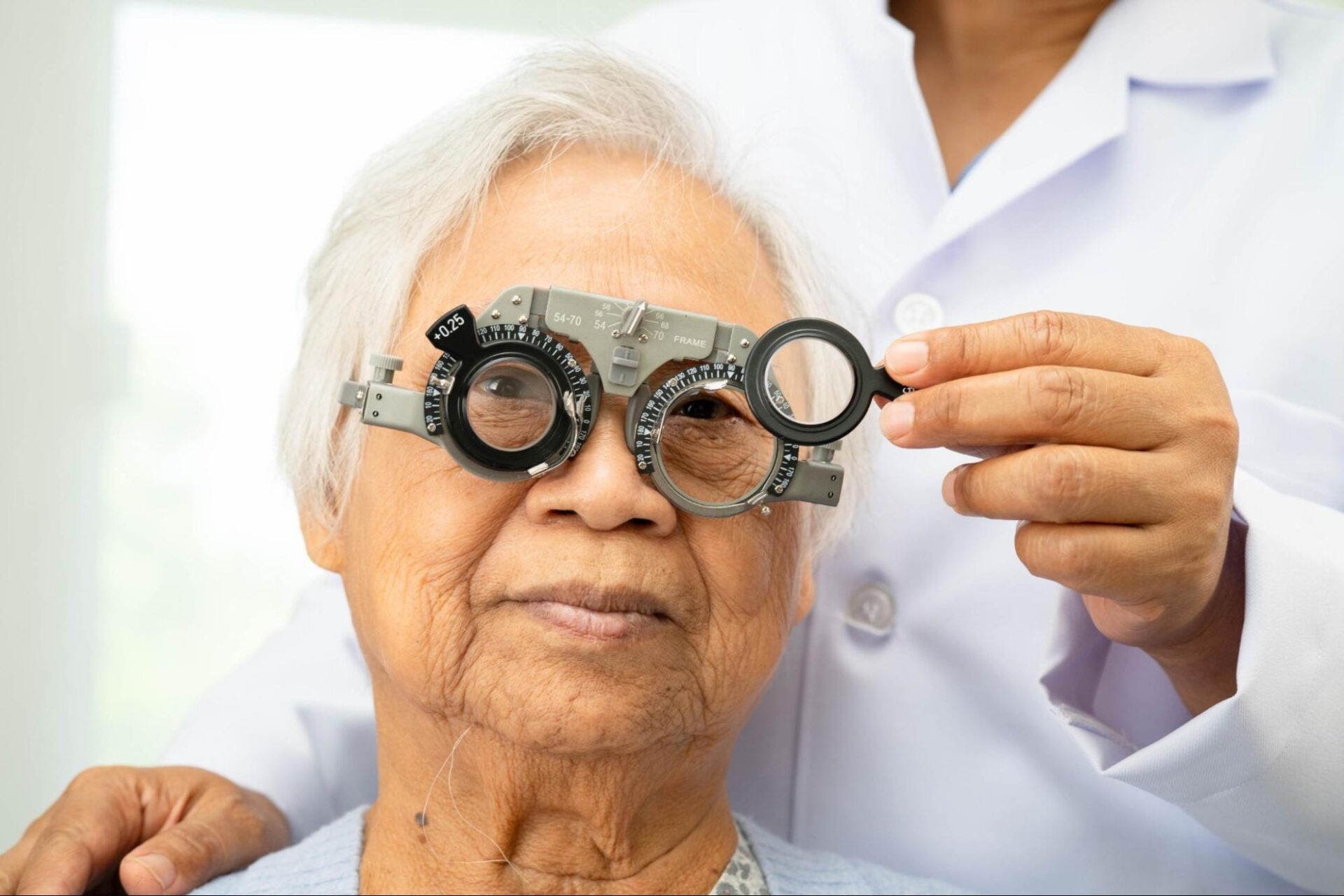
Early referral for low vision care allows patients to begin rehabilitation sooner and maintain greater independence.
Low vision treatment and rehabilitation options
While low vision cannot be cured, many treatment and rehabilitation options help improve visual function and support independence in daily living. These approaches focus on maximizing remaining vision rather than restoring normal sight.
Low vision glasses and optical aids
Specialized glasses, filters, and optical magnifiers can enhance detail recognition and reading ability. These devices are often customized based on a patient’s specific visual needs and daily activities.
Magnification devices
Handheld magnifiers, stand magnifiers, electronic magnifiers, and miniature telescopes help enlarge text and objects for easier viewing. Different magnification tools may be used for reading, writing, or seeing objects at a distance.
Assistive technology
Digital tools such as screen readers, large-print displays, and accessibility settings on computers and mobile devices support reading, communication, and computer use. Many of these technologies can be adjusted to accommodate changes in vision over time.
Vision rehabilitation services
Vision rehabilitation programs teach strategies to maximize remaining sight, adapt environments, and perform daily tasks safely. Occupational therapists and mobility specialists often play a key role in helping patients maintain independence.
Medical or surgical treatments
When appropriate, managing underlying eye disease through medical or surgical treatments may help preserve vision or slow further decline. These treatments are typically combined with rehabilitation strategies for optimal results.
Living with low vision: support and adaptation
Living with low vision often requires adjustments, but many strategies can improve independence and safety. Improved lighting, higher contrast in home environments, and organizational techniques make daily tasks easier.
Mobility training can help individuals navigate unfamiliar spaces. Emotional support, counseling, and support groups also play an important role in maintaining mental well-being and quality of life. Low vision care focuses not only on vision but on helping individuals remain engaged in daily life.
When to see a low vision specialist
Evaluation by a low vision specialist is recommended when standard glasses or contact lenses no longer provide adequate vision. Difficulty performing everyday activities, reading, or navigating safely are common signs that low vision care may be beneficial.
Early referral allows patients to access rehabilitation services sooner and take advantage of tools that support independence and functional vision.

If you’re in the greater Los Angeles area and would like to schedule a comprehensive eye exam to evaluate your vision, contact Dr. Besser’s office to sign up for a consultation.
Recent Posts
-
Dry Eye Treatment Options Explained: OTC vs. Prescription Eye Drops, Punctal Plugs, Lacrifill, and IPL
-
Blue Light Glasses: Do They Actually Work? What the Science Really Says
-
LASIK and Dry Eye: The Honest Conversation I Have With Every Patient Before Surgery
-
TECNIS PureSee Just Got FDA Approved: Here's What It Means for My Patients

Contact Us
Related articles

Vision Training: Eye Exercises for Stronger Eyes and Improved Vision
Discover what science says about vision training. Plus eight eye exercises patients can try at home.
-
Eye Health

Sudden Wavy Vision: Possible Causes To Consider
Discover the possible causes of sudden wavy vision, and how to determine when to seek professional care.
-
Eye Health

Supplementing Your Vision: Key Nutrients + Vitamins For Healthy Eyes
Seven nutrients and vitamins for eyes that can lead to a happy, healthier lifestyle.
-
Eye Health